Today, as we celebrate the Feast of the Holy Family during this blessed season, we reflect upon the importance of family and our role as members of both local and global communities. This video on the Call to Family, Community, and Participation is the third in our new CST101 video series!
Solidarity
Humble Listening in The Year of Mercy
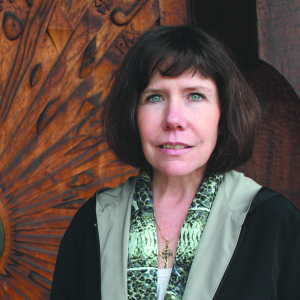
Sr. Kathleen McManus, OP
Credit: Clarice Keating/Catholic Sentinel
She is brilliant and beautiful, and she was my student in an Introductory Theology course. She is Muslim, and she spent the better part of her childhood growing up in Kurdistan. At semester’s end, I learned of the atrocities she witnessed as a child, including the murder of her grandfather. And I learned that she keeps that part of her story hidden from others, because she wants to be normal; she wants to fit in. She is safe now, but the people she left behind are not.
Victims of poverty, violence, and political turmoil, all of those who are disenfranchised by society, all who dwell on the margins – these are the ones who reveal to us the Reign-of-God-not-yet-come. They reveal it by contrast, precisely through their cries for deliverance from all the ravages of the anti-Reign. How do we train our ears to hear the voice of God in these cries? Moreover, how do we attune ourselves to the silence of the countless voices rendered mute by systems of dominance? From what do we need to empty ourselves in order to encounter the Truth to Whom we claim to belong?
In every global context from which the cries of suffering arise, women bear a unique burden of voicelessness, even as they bear the burden of care for life in its most basic, embodied form. Witness streams of refugees seeking safe haven from violence and torture: Amidst this dire pilgrimage, it is women who struggle to sustain children and the infirm on their perilous journey in the hope of freedom. And, as terror spreads a global shadow, we who are accustomed to dwell secure are startled by the prospect of our own vulnerability.
The attacks on Paris drew an immediate response of solidarity from the Western world, especially the U.S. Why? With the constant violence inflicted upon people in the Middle East, why the dramatic response to this incident? We know why: They are us. And that became all the more evident in the tragic San Bernardino shootings. We are vulnerable, and we Americans don’t like to think of ourselves as vulnerable.
Answers are elusive. Perhaps our call is to a saving question: Might this glimmer of felt vulnerability be our means of solidarity with the truly helpless vulnerable masses? Might it open the ears of our hearts to the voices drawing us into communion with Truth? Might it mark out a path of encounter mediating the healing of relationships, systems, and perceptions that will enable the reign of God’s mercy to come on earth as in heaven?
Pope Francis has inaugurated a Year of Mercy. And now we approach Christmas, when we celebrate God’s Mercy born in human flesh. How might we bear God’s Mercy in our flesh? How might our persecuted and suffering sisters and brothers teach us the vulnerability that issues in mercy? The Year of Mercy is a time for humble listening.
Kathleen McManus, OP is Associate Professor of Theology (Systematics) and Director, Master of Arts in Pastoral Ministry Program at the University of Portland
Sr. Kathleen McManus will present at the 2016 Catholic Social Ministry Gathering on The Global Suffering of Women as an Ethical Imperative for the Church. See registration information and schedule.
On the Tragedy in San Bernardino
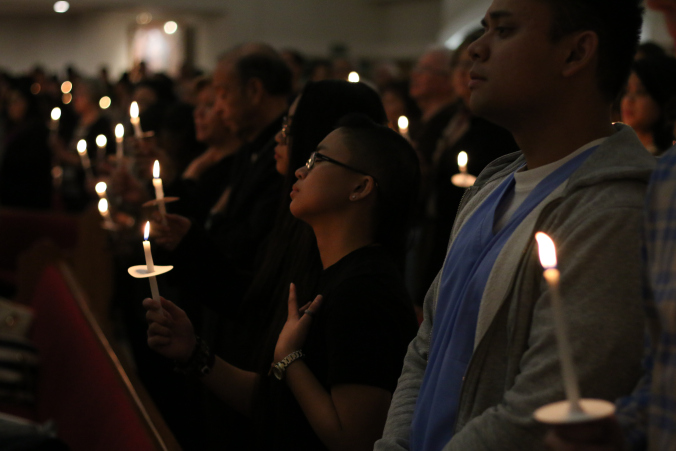 The mass shooting on December 2nd has devastated our communities here in the Diocese of San Bernardino. We continue to pray for the repose of the souls of the 14 victims that lost their lives in this terrible shooting.
The husband of the principal of our Catholic Parish School at Sacred Heart in Rancho Cucamonga was one of the victims. His name was Mr. Damian Meins. His funeral was on Friday, December 11th. Our prayers go out to the family of Mr. Meins and all of the families who have lost their loved ones. Mr. Damian Meins worked for the County of Riverside for 28 years and had recently begun working for the San Bernardino County of Environmental Health Department. He was also the physical education teacher at St. Catherine of Alexandria School in Riverside and for the past few years had dressed up as Santa for the school. He is remembered as being kind-hearted, compassionate, and caring.
Before the shooting happened, we at the Social Concerns Office of the Diocese of San Bernardino had organized a Taize Prayer in collaboration with the Global Solidarity Diocesan Committee, Catholic Relief Services (CRS), and Sacred Heart Parish in Rancho Cucamonga. The Taize prayer vigil was to show solidarity for refugees and the victims of the Paris attack. We had distributed the flyer months ahead of time. It is a deep mystery to see that the same parish that helped organize a prayer to show solidarity for victims of terrorist violence was now directly affected by senseless violence in their own city.
On December 4th, two days after the mass shooting, the organizing committee gathered to revise the Taize Prayer to integrate a special prayer to show solidarity for the 14 victims of the San Bernardino tragedy and specifically for Mr. Meins and his family. The diocese, parish, and school community gathered to pray and light candles for healing and peace. Most Reverend Bishop Barnes, Bishop of San Bernardino and Rev. Benedict C. Nwaschukwu, Parish Pastor guided us in our prayer.
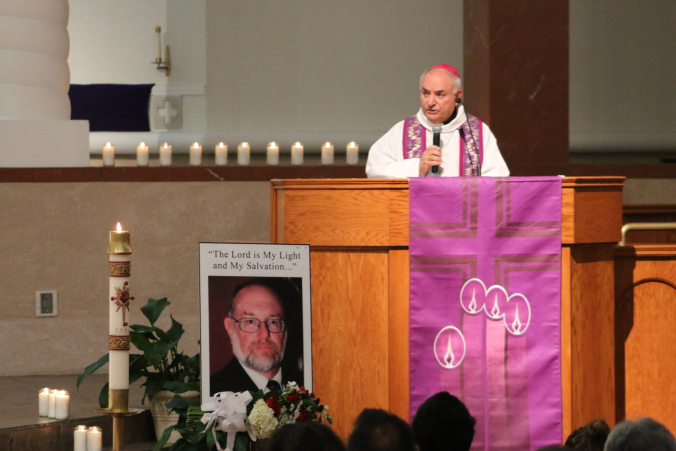 The presence of Bishop Barnes was especially meaningful to the healing process of the Sacred Heart Parish community. Bishop, our pastor, was with us.
In times of deep suffering it is healing to experience clear signs of Emmanuel: God with us. “Even though I walk in the dark valley, I fear no evil; for you are at my side with your rod and your staff that give me courage.” ( Psalm 23:4) Bishop Barnes was with his people and expressed his empathy and solidarity. He said: “For some of us, it will take much longer to heal. And we respect where each person is in their pain, in their anger, in their sorrow, in their confusion.”
He added: “Let your hearts and your minds be open to God’s message for you, for all of us, for our communities and our families. Be open to where our God, a God of mercy and love, leads us.”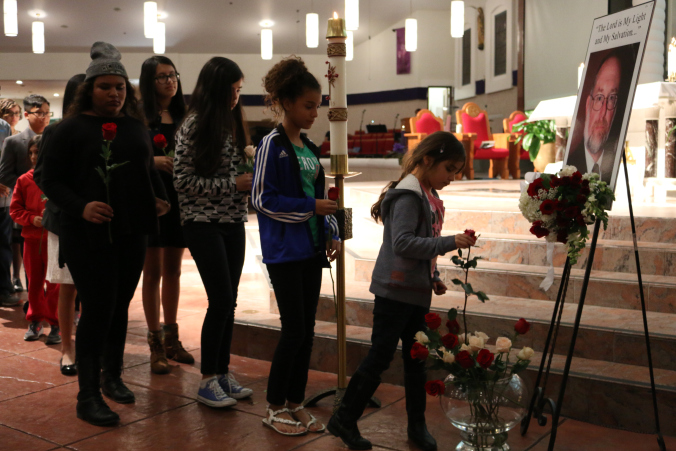
At the end of the prayer, the students of Sacred Heart Parish School offered fresh roses in memory of Mr. Meins.
On December 7th, two days after the Taize Prayer at Sacred Heart Parish, an interreligious prayer vigil at San Bernardino’s Our Lady of the Rosary Cathedral was organized in order to comfort friends and families of the victims, first responders and other civic leaders affected by the Dec. 2 attack. Inland Congregations United for Change, a group Catholic Campaign for Human Development has supported, was key in organizing the interfaith prayer vigil. Bishop Barnes gave the opening address and expressed: “We want what is good for our community. We do not want evil to win over our hearts, our pain to paralyze our future. We do not want our hearts to turn against any person, any race, any religion.”
As a community, we are discerning ways to continue our healing process. We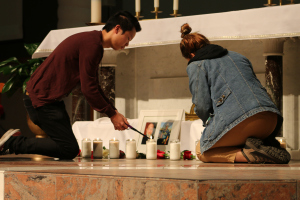 understand it may be a slow and long process. People are afraid and have many mixed emotions. However, we as a faith community would like to be a source of hope because as Bishop Barnes expressed at the interreligious prayer vigil: “We believe that love is greater than hate; courage greater than fear; unity greater than separation.”
We, at the Diocese of San Bernardino, are thankful to all the people who have expressed their support in these challenging times. Thank you for letting us know that we are not alone; that you are with us in your prayers and acts of solidarity.
Sr. Hortensia Del Villar, SAC is the Director of Social Concerns in the Diocese of San Bernardino.
Photos by Andres Rivera, courtesy of the Diocese of San Bernardino
On Thanksgiving, let us remember our history as refugees
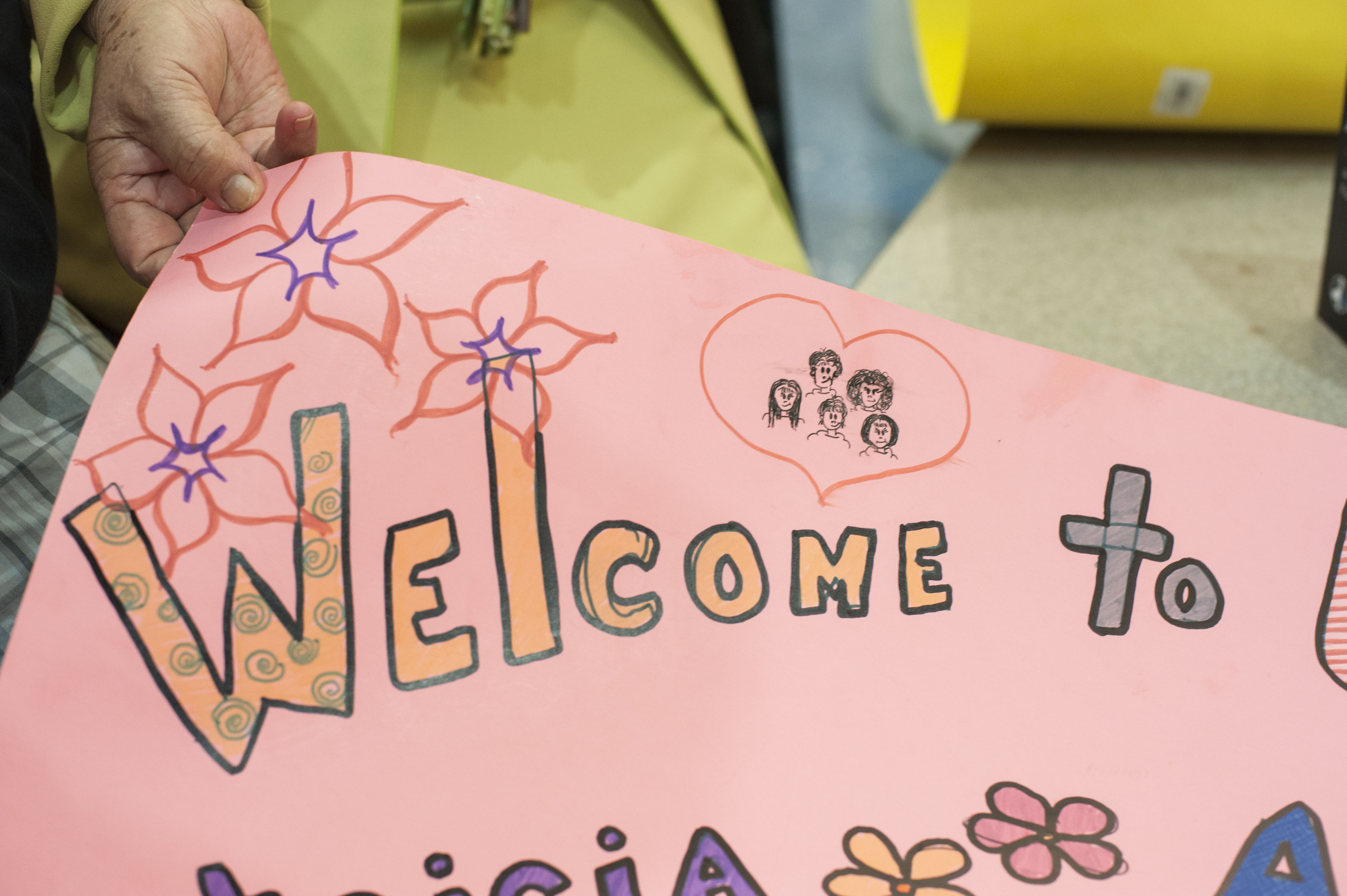
A woman holds a sign her for a family of refugees arriving to the United States. (Photo credit: Sarah Williamson of Jacksonville, Florida)
The foundation of our nation is the fundamental belief that the United States is a land of freedom, opportunity, and compassion. Indeed this week we celebrate Thanksgiving, a uniquely American holiday that enshrines this storied tradition.
That foundation has been challenged in the past couple weeks, since the tragic terrorist attacks in places like Paris, Beirut, and Mali. Many public officials are calling for Syrian refugees to be turned away, fearing that they present a terror threat to Americans.
As Catholics and Americans, we must remember our core values of compassion and justice. Indeed these values are the very reason the U.S. refugee program exists - to help people in need and continue to be a beacon of hope in the world.
The refugee program is thorough in ensuring that the people entering the United States have no ties to terrorist organizations. Refugees go through the most extensive security checks of any people arriving to the United States. That’s why the process that can take up to two years, to make sure that we are resettling the right people. The United States deliberately resettles the most vulnerable people: most are women and children, and only two percent are single men. All are fleeing violence like what the world witnessed in Paris, but on a more frequent basis. Since the terrorist attacks in September 2001, more than 784,000 refugees have been accepted into the United States, with no terrorist attacks occurring in the United States.
The refugee program is an expression of our solidarity with refugees, as well as with our important allies around the world. Since 2011, when the Syrian conflict began, the United States has resettled a little over 2,000 Syrians; this is but a fraction of the four million Syrian refugees who have fled their country in search of safety. Next year, the United States has indicated its willingness to accept 10,000 Syrian refugees to show solidarity with Middle Eastern and European countries who are hosting millions. By accepting refugees into the United States, we stand shoulder to shoulder with our allies around the world, helping people who have nowhere to go and yet have so many skills and talents to offer our nation.

A young girl waits at the airport to greet an arriving refugee family. She is participating with her family in the local POWR program at Catholic Charities in Florida. (Photo credit: Sarah Williamson of Jacksonville, Florida)
Migration and Refugee Services at USCCB has been resettling refugees for fifty years. We know how to do this in a way that facilitates their integration into American society. For example, the Parishes Organized to Welcome Refugees (POWR) program matches arriving refugees with community and parish volunteers who assist the refugees in navigating their new lives in the United States. This program also offers an opportunity for Americans to live their faith in a concrete way, for the benefit of all in their community.
In his visit to Lampedusa and in his calls to Catholics to help, Pope Francis has defended the rights of all Syrian refugees. In his message to Congress, Pope Francis urged us to treat others as we wish to be treated: “The yardstick by which we measure others is the yardstick by which time will measure us.” This is the Golden Rule, which applies to all.
The debate on Syrian refugees is a teaching moment for all Americans, and an opportunity for us to call to mind our deepest held values. The Catholic Church not only resettles the largest number of refugees in the United States through the Catholic Charities network nationwide, but does so in accordance with Christ’s teaching of welcoming the stranger, “the least of these.”
Let us remind ourselves and our fellow Americans that we, like generations before us, came to this country to find safety and freedom, just as Syrians and others around the world seek now. Let us not forget what we stand for as a nation and as a people of faith.
As the Holy Father told Congress, “In a word, if we want security, let us give security, if we want life, let us give life; if we want opportunity, let us give opportunity.”
 Kevin Appleby is the Director of Migration Policy and Public Affairs at Migration and Refugee Services, United States Conference of Catholic Bishops.
How to address the Syrian refugee crisis in a humane way
Found lying face down and lifeless on a Turkish beach, the three year old Syrian boy, Aylan Kurdi, was another victim of the violence in Syria that had caused his family to flee their home in pursuit of a better life elsewhere. Photos of his drowned, crumpled body quickly went viral, and the scales from people’s eyes seemed ready to fall away as the Syrian conflict and the refugee crisis it helped produce suddenly became personal. As tragic and unnecessary as his death was, his case was not an isolated event. More than four million refugees have fled the region since 2010, with most taking shelter in surrounding countries. Many thousands have died in the process; countless others struggle with the daily ritual of just trying to survive.
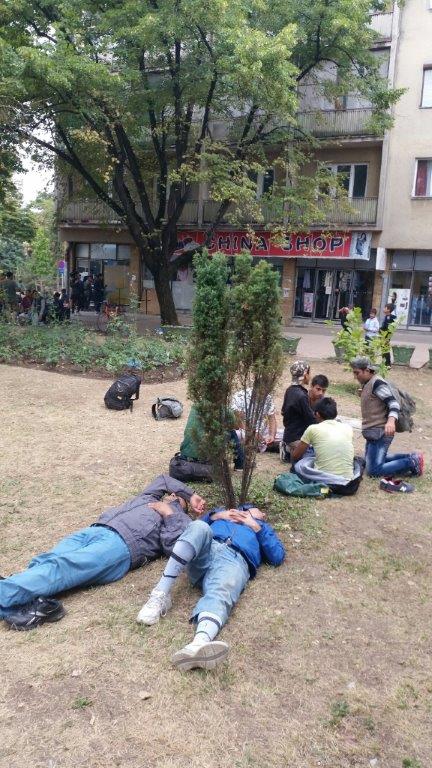
Some 2,000 refugees and economic migrants are entering Serbia daily en route to the European Union. Serbia’s public spaces, like this park in the border town of Kanjiza, have become temporary homes to those in transit.
As many as one in three people living in Lebanon today is a refugee from the Syrian crisis. Turkey hosts nearly two million, and Jordan 600,000 more. Syrians have begun to face increasing challenges to find safety and protection in neighboring countries, which, faced with overwhelming refugee numbers, insufficient international support, and security concerns, have taken measures this year to stem the flow of refugees – including restricting access or closer management of borders and introducing complex requirements for refugees to extend their stay.
As a consequence, tens of thousands of refugees have begun the difficult trek west, with the hope of finding a new home in countries throughout Europe. Despite initial efforts to provide a humanitarian response to these refugee populations, signs of strain are clearly beginning to set in as leaders of countries throughout the region have begun to tighten their borders and restrict further access.
Reflecting on this expanding and deepening problem, Archbishop Joseph Kurtz of Louisville, KY and President of the United States Conference of Catholic Bishops, urged “all Catholics in the United States and others of good will to express openness and welcome to these refugees, who are escaping desperate situations in order to survive. Regardless of their religious affiliation or national origin, these refugees are all human persons—made in the image of God, bearing inherent dignity, and deserving our respect and care and protection by law from persecution.”
Elsewhere Pope Francis has highlighted the moral obligations of the international community toward migrants, emphasized the need to establish institutional structures that can more effectively respond to crises of this sort, and called on “every parish, every religious community, every monastery, every sanctuary of Europe” to take in one refugee family.
Recognizing that inaction will only have dire consequences for the many vulnerable refugees who are seeking a place of safety, the Catholic bishops of the United States have made a number of recommendations related to this problem. These include
- Ending the conflict in the region and establishing a workable peace is of paramount importance.
- Building an inclusive and lasting peace to allow Syrian refugees—also including those who are ethnic and religious minorities- to return home, rebuild their communities, and share in the governance of their country.
- Providing humanitarian assistance to Syrian refugees who have fled to neighboring refugee countries.
- Providing development aid to refugee host countries near Syria so they are able to properly welcome and care for the refugees.
- Authorizing the admission and resettlement of 200,000 refugees into the U.S. from refugee countries across the world, including 100,000 resettlement slots designated for the most vulnerable refugees fleeing the Syria conflict.
Please, take a moment to learn what steps you can take to help Syrian and other refugees in their moment of need.
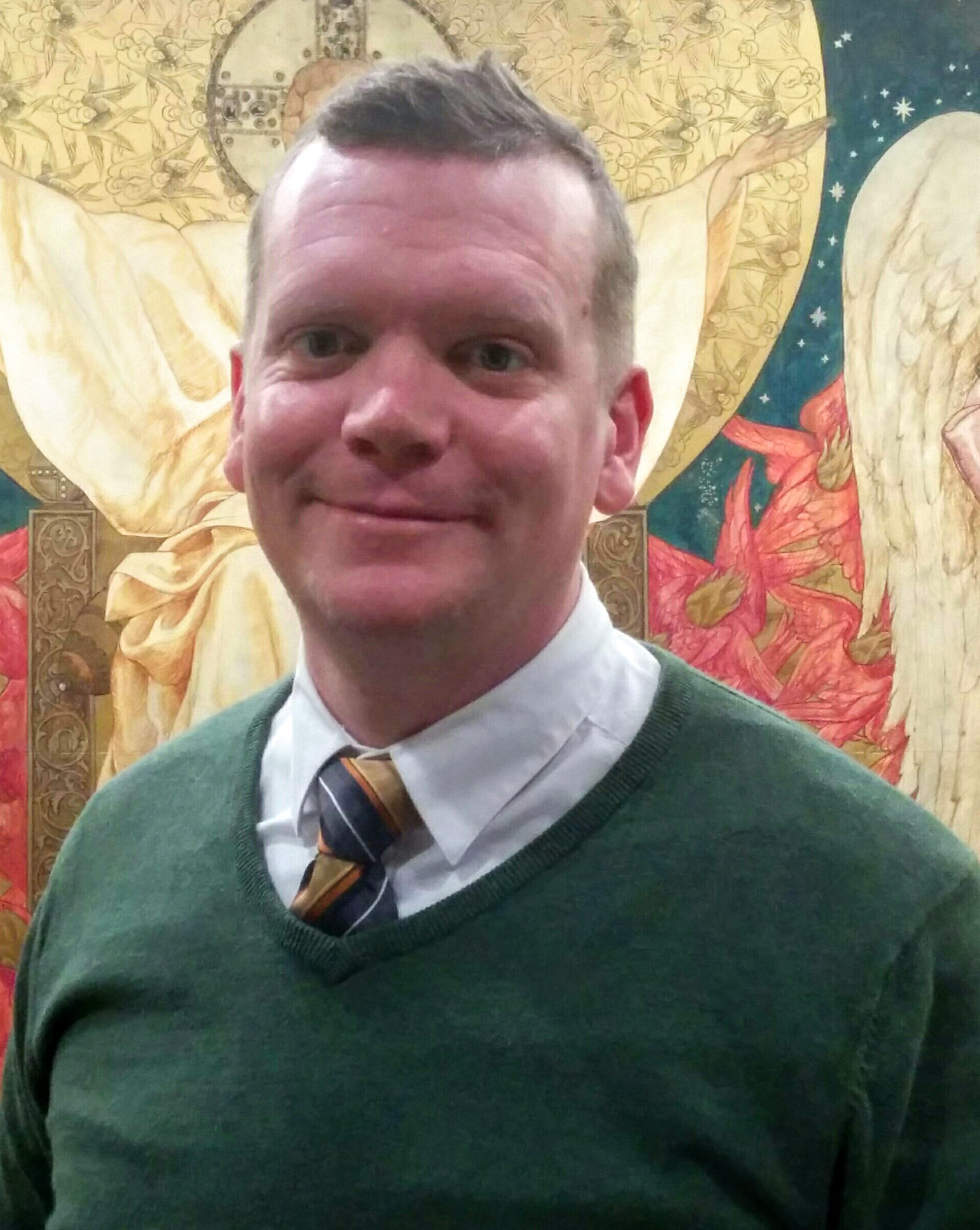 Todd Scribner is the Education Outreach Coordinator for Migration & Refugee Services at the USCCB.
Take action now! Support for Syrian Refugees is Needed Now More Than Ever - Action alert from Catholics Confront Global Poverty, an initiative of the United States Conference of Catholic Bishops and Catholic Relief Services.
Mass at the border – celebrating our migrant brothers and sisters departed
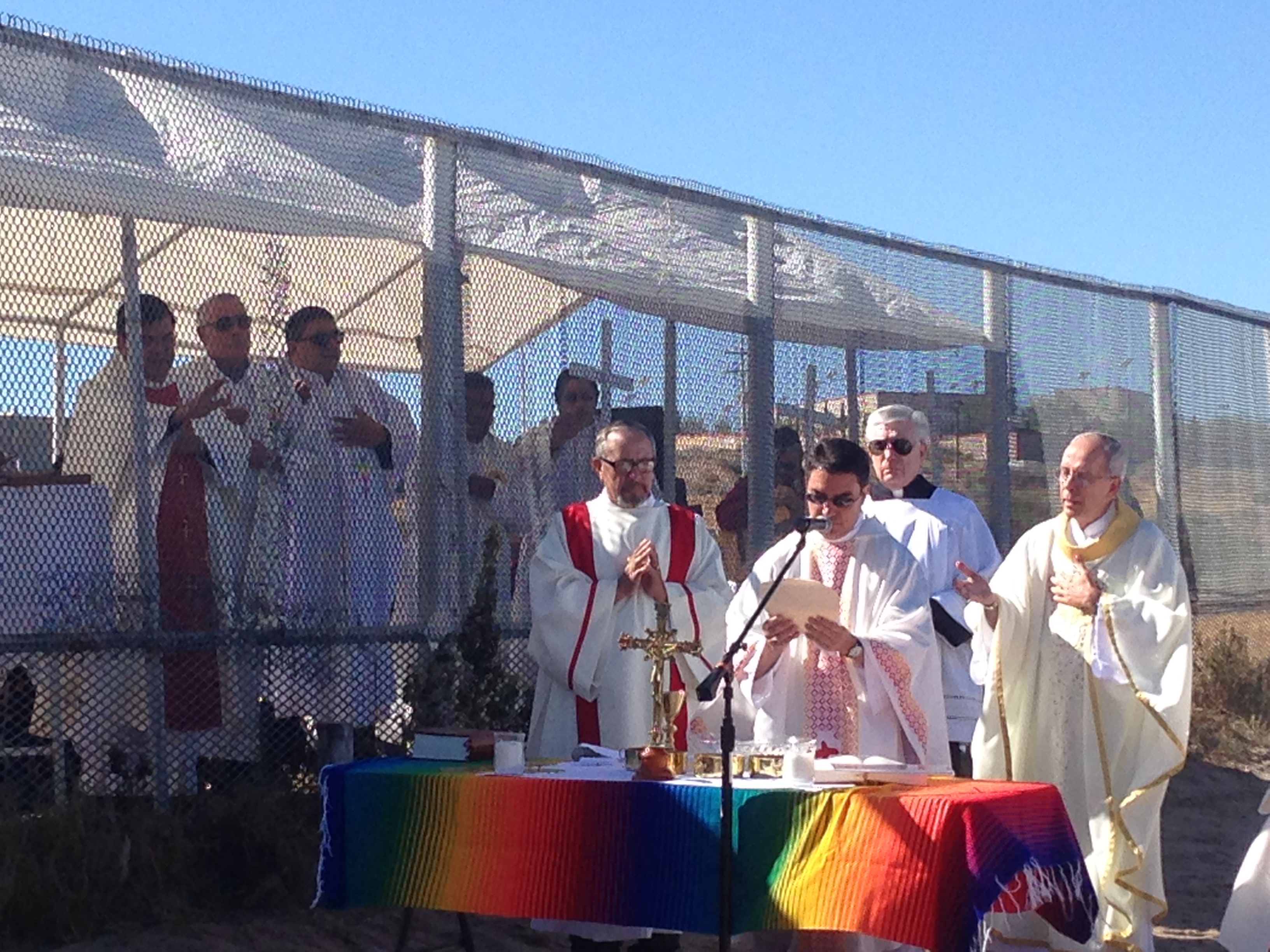
November 2nd is the day we Catholics celebrate our faithful departed. On a personal level, we remember those loved ones who walked with us on this life and have gone to the eternal home to continue their life journey. On the church level, we remember them as our brothers and sisters who share a common faith with us and have gone to continue their faith journey in heaven with all the angels and saints.
Here on the border between the U.S. and Mexico, within the dioceses of Las Cruces, El Paso, and Ciudad Juarez, in the month of November, we have a tradition to celebrate Mass right on the border line.
Smack against the border fence, we observe the feast of the faithful departed – Día de los Muertos, as it is known in Mexico and in other countries of Latin America – to pray in supplication and thanksgiving. We remember all our migrant brothers and sisters who have found death on their treacherous journey north, in search of a more dignified life for themselves and their families, often seeking to reunite with their fathers, mothers, sons, daughters, and other relatives.
This tradition started a few decades ago, in the wake of the many border enforcement initiatives enacted to deter migrants from entering this country without inspection. Enforcement operations such as “Hold the Line,” “Gatekeeper,” and “Safeguard” have pushed thousands of people to try to enter through harsh regions and consequently increased the number of deaths along the border.
To honor their lives and call attention to these deaths taking place along with the increasing militarization of the border, these three border dioceses started this beautiful and moving celebration that is now nationally known as the Border Mass.
Several hundred people gather every year on both sides of the border, around a common altar, to celebrate the Eucharist, symbol of communion, in a place that seeks to divide peoples and families. We announce the Gospel of inclusion, remembering that we are all one family of God, called to walk with each other in love. We share the Body of Christ and exchange the sign of peace across the border through the fence, despite opposition from the border patrol officials and ground agents.
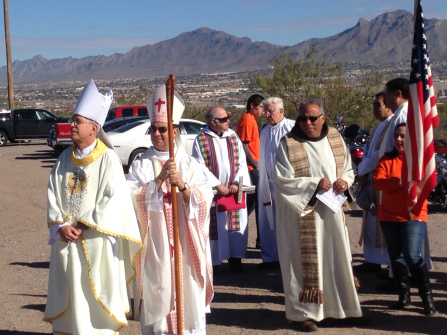
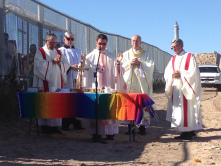
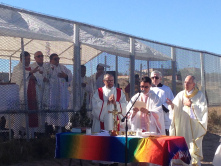
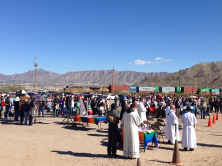
The bishops of the three dioceses take turns presiding and the clergy of all three dioceses come to accompany the faithful, as we remember those migrants who have passed on to the eternal life. We pray for them in thanksgiving, for the gifts with which they have enriched the lives of their loved ones and ours. We also pray for change in our hearts, from hardened to welcoming, change in our immigration laws, for immigration reform, and for more Catholic engagement in advocacy so we can enact these changes.
As part of this Mass, we bring symbols of faith and pilgrimage, of migration, suffering, accompaniment, unity and hope. We present an image of the Virgen of Guadalupe as mother and consoler, a backpack, water, sandals, our national flags, and a crucifix representing our common faith in our Lord and Savior, who strengthens and accompanies us all pilgrims, those who are coming, those who arrived, and those who have departed ahead of us.
This is a wonderful moment of prayer and solidarity on the border.
Virgen de Guadalupe, ruega por nosotros! Amen.
Marco Raposo is Diocesan Director of the Peace and Justice Ministry in the Diocese of El Paso.
Visit the U.S. Conference of Catholic Bishops’ Justice for Immigrants Campaign website to learn more about the Church’s work to promote positive immigration reform.
The 2008 film “One Body, One Border” tells the story of the Border Mass. Learn more about the film.
5 Ways to Fair Trade This Month, or Any Time of Year
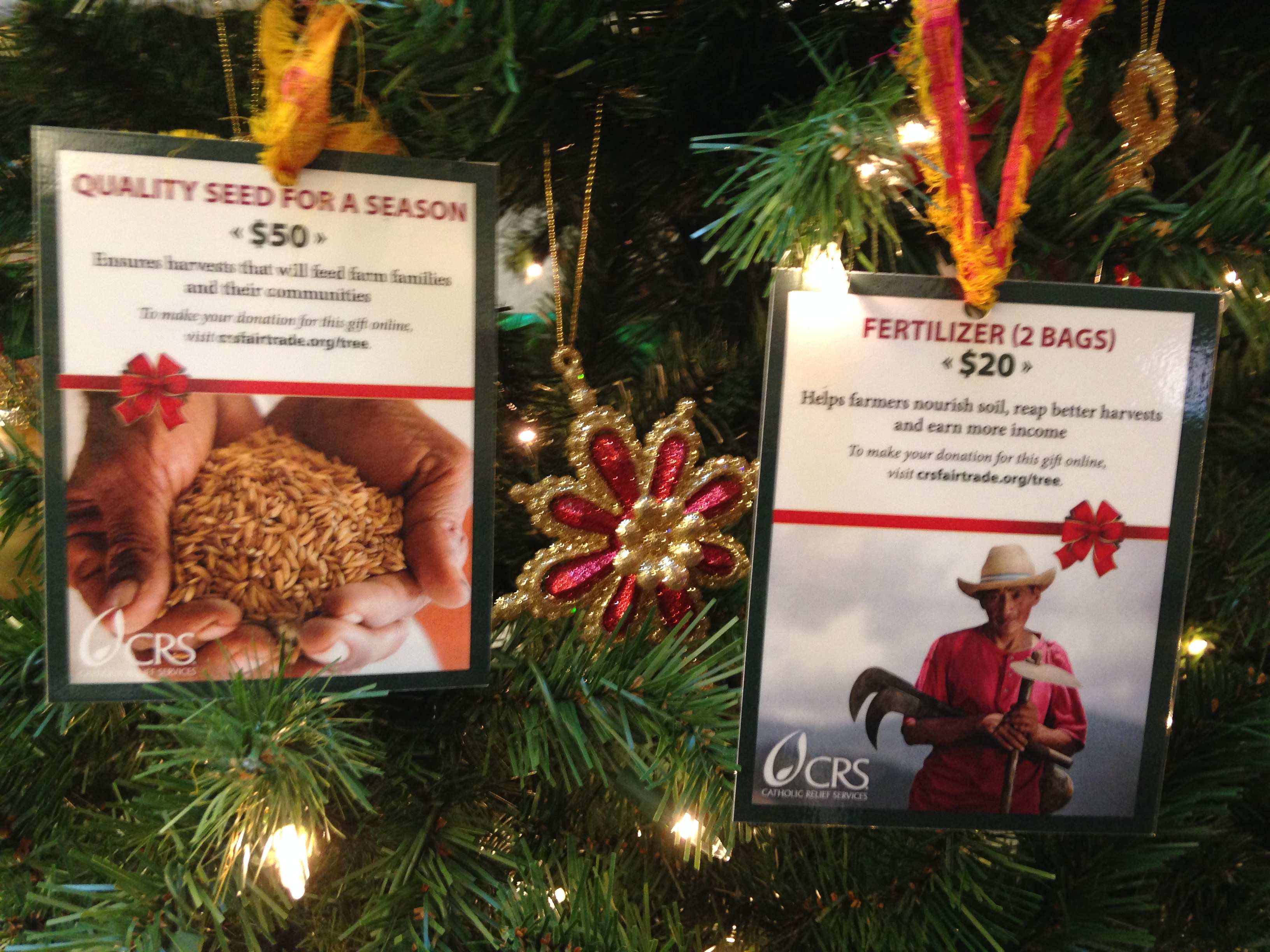 In October Catholic Relief Services (CRS) Fair Trade celebrates the fair trade movement in a special way. At its core, the fair trade movement creates enduring relationships that uplift human dignity and ensure a better work environment for marginalized farmers and artisans around the globe.
Over the years, I’ve had the privilege to meet artisans and farmers whose lives are positively impacted by the benefits of a trading system that pays a fair price, provides monetary support for community development projects, and supports farmers and artisans with financing and product development.
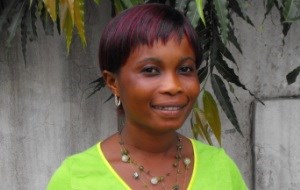
Fatima Ali, President of Kuapa KoKoo Farmers Union
Farmers like Fatima Ali, president of the Kuapa KoKo farmers union in Ghana. Her farmers union produces the cocoa for Divine chocolate. Fatima shared with me the real impact that fair trade has had on her life and the life of her community: financial independence, schooling for children, a well with clean water, and safe secure houses.
When economic justice is your job, it is sometimes easy to get lost in the details and complexity but it really is quite simple. Every day our economic choices affect our brothers and sisters around the world positively or negatively.
Here are five simple ways to live your faith in the market place and encourage your school, parish, or community to do the same.
- Bring faith formation to life through reflections, prayers, and activities with a global perspective.
Find out how fair trade relates to our faith with our Catholic Social Teaching and fair trade resources. You can also prepare for Advent with special prayers, weekly reflections connected to the Gospel, and activities to help prepare our hearts and minds to receive Jesus! 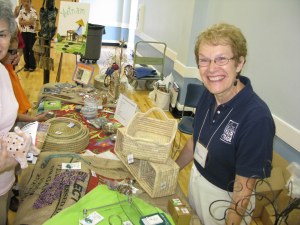 Host a CRS Fair Trade Consignment Sale before and after Masses. Bring fairly traded art, jewelry, gifts, and housewares to your parish and teach parishioners about fair and ethical purchasing.
Call 1.800.685.7572 or request a consignment information packet and order beautiful products from fair trade artisans through our partner Serrv at no cost to you!- Host a CRS Fair Trade Community Order and share fair trade with your small faith community, youth group, women’s group, senior group, or other ministry. Raise awareness and funds!
 Call 1.800.685.7572 or request a free CRS Fair Trade Community Order packet online. Round up all of the individual orders from your group, and place one order ($300.00 minimum). Make a 20% profit for your ministry!
 - Participate in a community shopping event to benefit CRS at Ten Thousand Villages stores nationwide on Friday October 16. Fifteen percent of customer-designated purchases will be donated to CRS to support artisans and farmers overseas. Can’t make it to the store? Shop on-line and use promo code CRS2015.
- Switch to fair trade coffee through CRS partner Equal Exchange or other CRS partners in your area.
Call 774-776-7366 or use this link to shop. Be sure to select “Catholic Relief Services Fair Trade Program” when setting up your account so that your purchase can be counted! Raise Money right with the Equal Exchange fundraising program. Schools make a 40% profit.
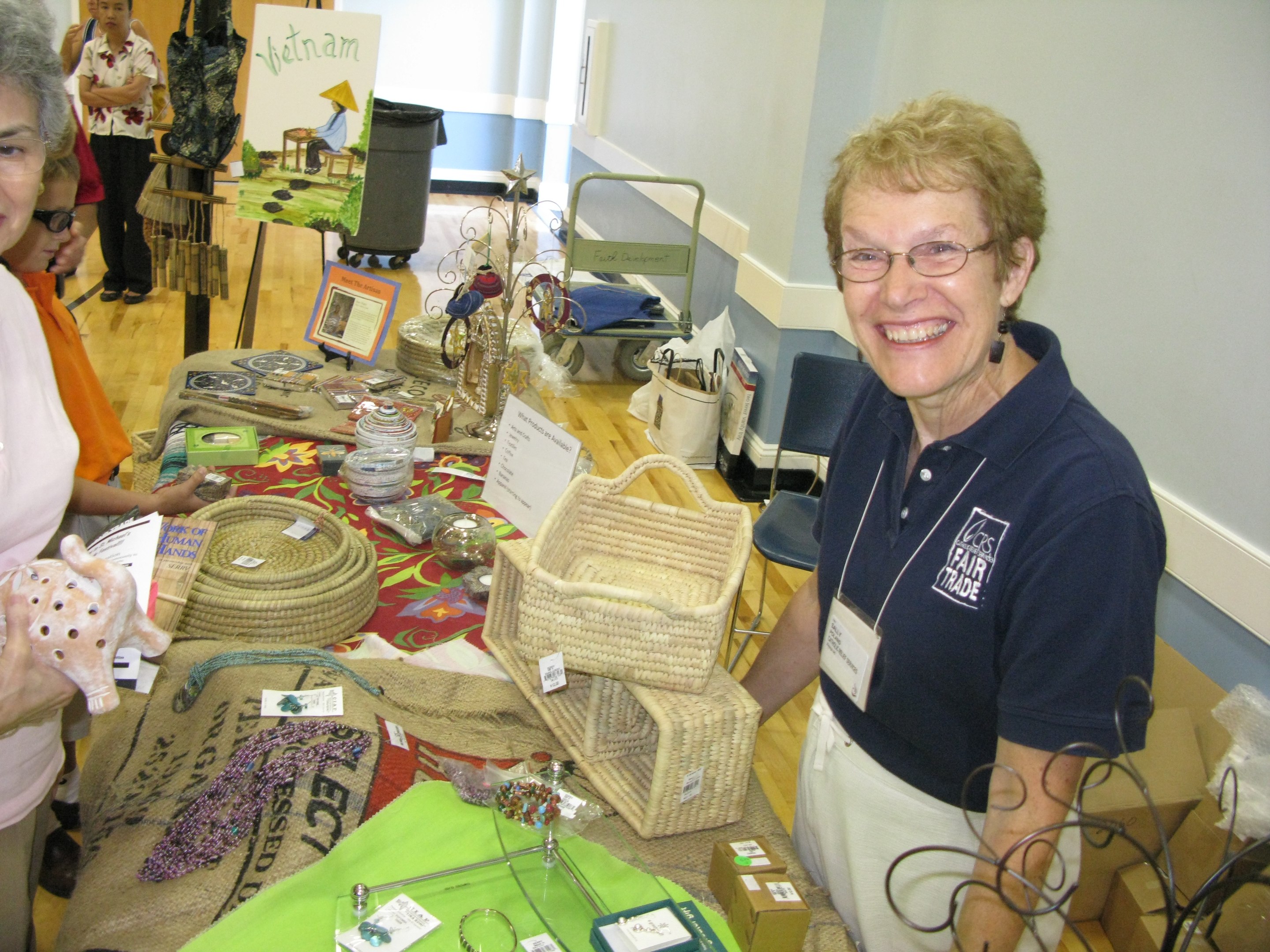
Remember when you support CRS’ fair trade partners, you support artisans and farmers, and provide economic opportunities for people living in poverty. For every purchase, our partners donate a percentage back to the CRS Fair Trade Fund to support artisan and farmer organizations overseas.
For more information visit crsfairtrade.org, email [email protected], or watch a short webinar on how to fair trade your fall.
 Simone Blanchard is the Manager of the Economic Justice Program at of Catholic Relief Services.
Sign up for more information about what the Church is doing to confront global poverty, U.S. international and economic policies, and their impact on poor people around the world. Visit Catholics Confront Global Poverty | Get Involved, an initiative of the United States Conference of Catholic Bishops and Catholic Relief Services.
